


Tuesday 1 July 2025
Last update on Tuesday, July 1, 2025 At 3:27 PM
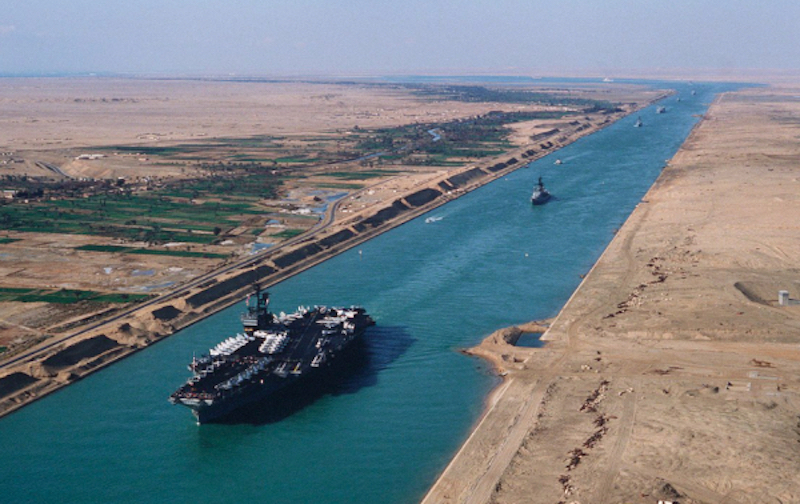
The attacks that occurred between November 2023 and November 2024 against merchant ships in the Red Sea severely disrupted maritime traffic through the Suez Canal. Most international shipping companies and oil majors had redirected their routes via the Cape of Good Hope. The number of ships using the maritime route fell by 50% in 2024 (13,200) and by 70% in tonnage, a level not seen since 1975. The decline that began in 2024 intensified again in the first quarter of 2025, with a drop of more than 17% compared to the same period the previous year and a 54% drop compared to the first quarter of 2023.
These disruptions have a significant impact on the Egyptian economy, with revenues from the Suez Canal, the country’s third largest financial source, falling by 62% year-on-year in 2024, to USD 3.6 billion, according to data from the Central Bank of Egypt.
Since the beginning of 2024, revenues have been divided by three to approximately USD 300 million per month. Only USD 1.8 billion was collected in the last half of 2024, compared to USD 4.8 billion the previous year. This contraction in revenue increases the fragility of the current account balance (a deficit of USD 11 billion in the last half of 2024, compared to -USD 9.6 billion the previous year).
In this context, development and modernization projects for the maritime route, fully funded by the Canal Authority’s investment budget, are continuing but could be slowed down.
The absence of attacks since November 18, 2024, and the conclusion of a ceasefire between the United States and the Houthis on May 6, 2025, were seen as a sign of calm, suggesting an improvement in the security situation in the Red Sea and, with it, the hope of a gradual return to normal for traffic in the Suez Canal.
In fact, the Canal Authority reported that in March it had regained the passage of 166 vessels that had changed their route to transit the canal instead of the Cape of Good Hope, compared to 40 in February. This recovery remained modest, however, with the monthly average volume needed to reverse the trend exceeding 1,000 vessels.
Before the start of the Israeli-Iranian conflict, analysts were still anticipating continued disruptions until the end of 2025 and a gradual resumption of flows and an increase in revenues starting next year. However, these would largely depend on the level of confidence among shipowners and the still-prohibitive costs of marine insurance. To restore confidence, the Suez Canal Authority adopted a series of measures, including a 15% reduction in transit fees for container ships over 130,000 tons, valid for a period of 90 days, as well as other temporary tariff incentives, insurance partnerships, and the organization of an international forum.
In this still fragile context, the outbreak of the Israeli-Iranian conflict, and more recently the US strikes against the strategic Iranian nuclear sites of Natanz, Fordo, and Isfahan, risk further delaying the prospect of a rapid resumption of traffic, given the uncertainties surrounding the position of the Houthi rebels and the closure of the Strait of Hormuz, through which many oil tankers transit via the canal.
Source: French Embassy in Egypt







Réagissez à cet article