


Friday 13 March 2026
Last update on Friday, March 13, 2026 At 5:31 PM
Since the start of the second war between Israel and the United States against Iran in less than a year, Tehran's strategy of precipitating a rise in global oil prices by blocking the Strait of Hormuz has sidestepped the question of the conflict's potential consequences for the Iranian oil sector.
It is true that the Islamic Republic of Iran (IRI), anticipating a possible outbreak of hostilities, had the foresight to quadruple its crude oil shipments during the month of February. Iranian operators reportedly stored nearly 200 million barrels of crude oil on the high seas before February 28th using tankers from the “ghost fleet,” which have not yet been identified by US authorities—a volume theoretically sufficient to supply China, their sole customer, for a quarter of the year.
While this strategy allows the Islamic Republic of Iran (IRI) to disrupt the global market and trigger a surge in crude oil prices without—at least in the short term—paying the price, the impending bombings could cause irreparable losses to the Iranian oil sector, which has suffered from a lack of investment since the imposition of US sanctions in 2018, across its four main segments.
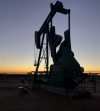
Regarding crude oil production, although Iranian capacity, estimated at 3.3 million barrels per day (mb/d) in February, has not yet been targeted by airstrikes, its vulnerability appears evident.
Concentrated in the west of the country, near the Iraqi border, and in the Persian Gulf (offshore), the oil fields operated by the IRI appear particularly vulnerable.
If the US-Israeli coalition strikes, thus far primarily focused on military targets, were to aim at weakening Iran’s economic capacity, their impact on unprotected sites could be devastating.
Washington seems to believe it is important to preserve this pillar of the Iranian economy in anticipation of a possible regime change, but its strategy could evolve if the conflict continues.
After plateauing for several months at 1.9 million barrels per day (mb/d) in the second quarter of 2025, Iranian crude oil exports, 95% of which are absorbed by China, fell to 1.2 mb/d in January, then to 1.5 mb/d in February.
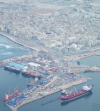
This reduction appears to be the result of Chinese private refineries choosing to reduce their exposure to Iranian risk while simultaneously increasing their imports of Russian crude (2.1 mb/d in February). The concern this development initially caused in Tehran now seems insignificant compared to the threats posed by the ongoing conflict on Kharg Island, where 90% of Iran’s exports are extracted.
Should the Kharg facilities be destroyed—or, as Donald Trump suggested, should the US military seize control—the Islamic Republic of Iran’s ability to sell half of its crude oil production would be wiped out, depriving it of a vital source of revenue.
Regarding consumption, Iran’s situation is paradoxical.
This is not the least of its paradoxes: for the past five years, Iran, which possesses the world’s third-largest oil reserves, has suffered from seasonal fuel shortages, which it attempts to compensate for by importing refined products. Under constant strain, the country’s refining capacity, clearly insufficient at 2.2 million barrels per day (mb/d) for a consumption of 2.4 mb/d during seasonal peaks, is at the mercy of the slightest technical incident that could disrupt the supply chain.
Under these conditions, the recent destruction by Israeli aircraft of the Tehran refinery (250,000 b/d) and several fuel depots and related logistics infrastructure is likely to impact the country’s economy more severely than this relatively modest volume suggests. If other refineries were to be affected—for example, those in Isfahan or Bandar Abbas, whose production fluctuates between 400,000 and 500,000 b/d—the consequences for the economy could prove devastating. Given the sector’s social impact, this prospect is likely a major concern for the regime.
Finally, Iranian industry as a whole has always been boosted by the availability of abundant and inexpensive oil and gas resources.
Therefore, there is no doubt that a campaign of strikes against oil infrastructure would cause the short-term shutdown of the majority of production units, starting with those in the petrochemical sector, the country’s largest, followed by those in sectors powered by the vast majority of gas and oil-fired power plants.
Source: French Embassy in Iran





Réagissez à cet article