


Aujourd'hui
Last update on Monday, March 9, 2026 At 11:11 AM
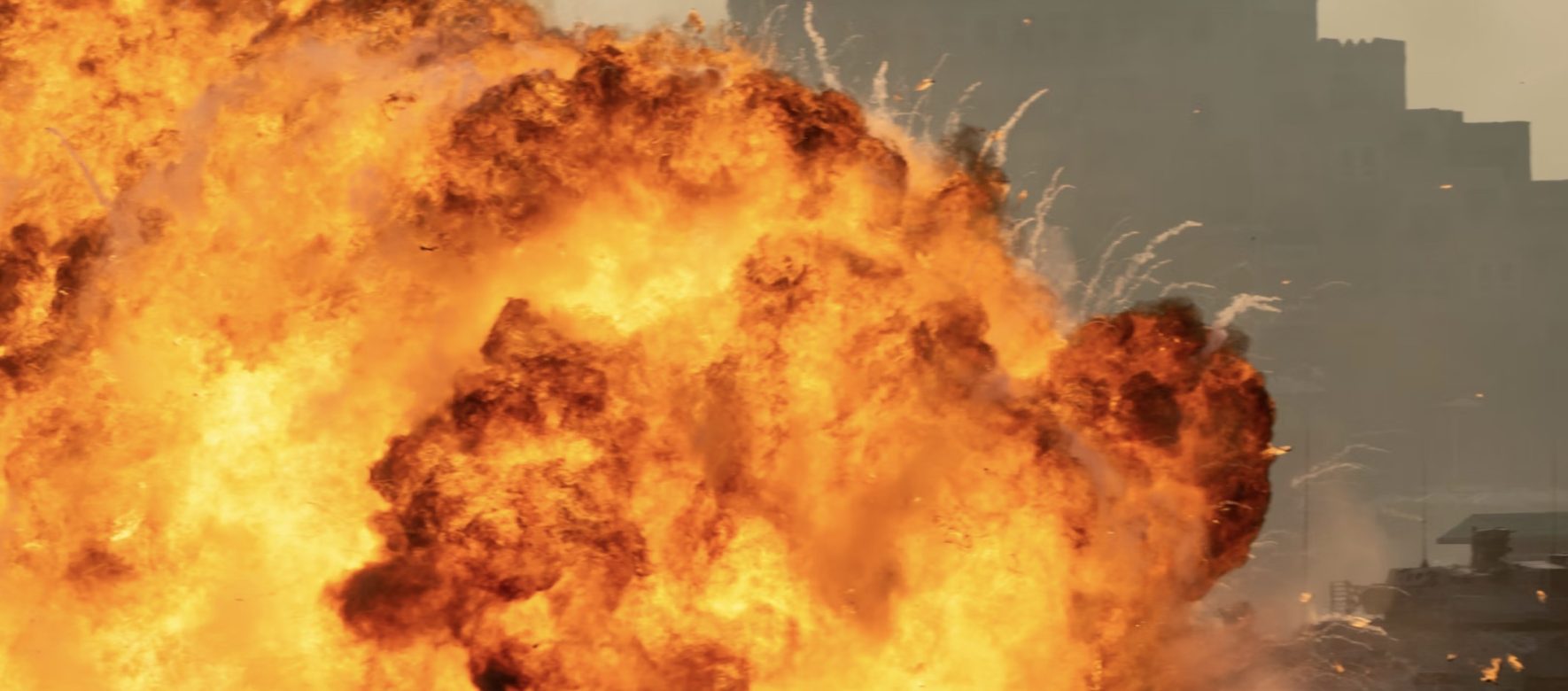
The war in Iran, triggered on February 28 by Israeli-American strikes, represents a major upheaval for the countries of the Near and Middle East, all of which are affected to varying degrees. Beyond the belligerents, drones and missiles have been intercepted in Jordan and over Syria, Iraqi Kurdistan (particularly Erbil) has been hit by Iranian strikes, and Hezbollah's attack on Israel on the night of March 1-2 led to a conflagration in Lebanon, with heavy attacks on the south of the country, in the Bekaa Valley and South Beirut.
While it is difficult to assess the extent of the destruction, as information coming from Iran, for example, is limited, it would appear that no critical infrastructure has been hit in the region so far, unlike in the Gulf countries.
The economic consequences of this conflict are already being felt in the countries of the Near and Middle East. First, there has been a disruption of trade flows.
Airspace has been completely closed (Iran, Iraq, Syria, and Israel, although repatriation flights are operating). The national airlines of Jordan (Royal Jordanian) and Lebanon (Middle East Airlines) have resumed or continue to serve Europe and some cities in the Middle East.
Maritime links are the most affected: in addition to the Strait of Hormuz, the Bab el-Mandeb Strait has been impacted, particularly by tensions with the Houthis, leading to the decision by major shipping companies (Maersk, CMA CGM, MSC) to suspend the passage of ships through the Suez Canal, which normally represents 12% of global maritime trade. Egypt’s related financial revenues will suffer as a result.
There is also an energy shock.
Hydrocarbon production has been halted in certain areas of Iraq, affecting both oil (Norwegian company DNO, Gulf Keystone, HKN, Shamaran) and gas (Emirati company Dana), leading to a decrease of more than a third in Iraqi oil production.
The sharp drop in hydrocarbon deliveries from Iran is impacting electricity production across the country’s provinces (20 to 30% of Iraq’s electricity is generated from Iranian gas). Israel has also suspended production and exports of gas from the offshore Karish and Leviathan fields.
As a result, difficulties are already emerging for Egypt, which receives 16% of its gas from Israel, and for Jordan (80% of its gas used for electricity generation is Israeli), thus cascading down to Syria (with the cessation of re-exports from Jordan), resulting in significant power outages.
Finally, the conflict is already beginning to affect several sectors of the economy.
For tourism, cancellations, currently concentrated in March, are already affecting Egypt and Jordan, where this sector represents 15% of GDP. Construction of the National Conveyor (desalination plant in Aqaba) could also be delayed.
For Iraq and, to a lesser extent, Syria, food imports, which come largely from Iran, could also be affected, especially since that country has banned all food exports until further notice.
Overall, the impact of the conflict will depend on the intensity of military operations, its duration, its macroeconomic effects (inflationary pressures, delays and transport costs), and the absorption capacity of the various countries (local currency depreciation, budgetary pressures).
Measures have already been taken to address the situation, such as the exemption of customs duties and taxes on goods imported by sea in Jordan, aimed at limiting the impact of increased freight costs.
Source: French Embassy in Lebanon and Israel





Réagissez à cet article